How to Make Your Mornings More Productive?

The first decisions of the day often happen before work begins. Repeated snoozing, a rush of phone notifications, and an undefined task list can make the morning reactive, while a few deliberate choices can create a calmer start.
You do not have to become a natural “morning person” to make your mornings more productive. The goal is to build a realistic routine that protects your energy and attention, then helps you begin the day with a clear sense of what matters.
What Makes a Morning Productive?
A productive morning is one that prepares your body and mind for the work ahead. It does not need to begin at 5 a.m. or include an elaborate list of habits. It should give you enough rest, movement, fuel, and planning time to start important work without immediately reacting to external demands.
Even though you do not have control over external circumstances, you can shape the first part of the day by changing a few repeatable actions and activities. A consistent routine reduces the number of small decisions you must make, creates a predictable transition into work, and gives you a better chance of protecting time for your priorities. These ways to improve productivity begin with seven practical choices.

Create a Sleeping Schedule
A fixed sleeping time and a consistent waking time make the morning less dependent on willpower. This healthy way of organizing sleep can reduce the frustration of repeated snoozing. When bedtime shifts widely from one night to the next, the alarm can feel like an interruption rather than the expected end of sleep, and the sleepy, groggy feeling can continue into the first part of the day.
Start by choosing a wake time that fits your real responsibilities, then work backward to create enough time for sleep. Keep the schedule reasonably consistent on weekends, and change it gradually if your current pattern is far from the target. The point is not perfection. It is to make waking, preparing, and beginning work feel familiar instead of chaotic.
Do Morning Exercises
Starting morning exercises is often the hardest part, especially when the routine is new. Keep the first version small enough to repeat: a brisk walk, a short mobility sequence, light strength work, or a few minutes on an exercise bike. There is no specific type of exercise that works for everyone, so you have the freedom to choose one that fits your space, ability, and schedule. You may start enjoying it once exercising becomes familiar and you realize that your mornings are getting better.
Movement can help create a clear transition from sleep to activity. The CDC’s guidance on the benefits of physical activity notes that a session of moderate-to-vigorous physical activity can reduce short-term feelings of anxiety in adults, alongside longer-term health benefits. You do not need an ambitious workout to establish the habit; consistency matters more than designing the perfect session on day one.
Take a Drink as You Relax
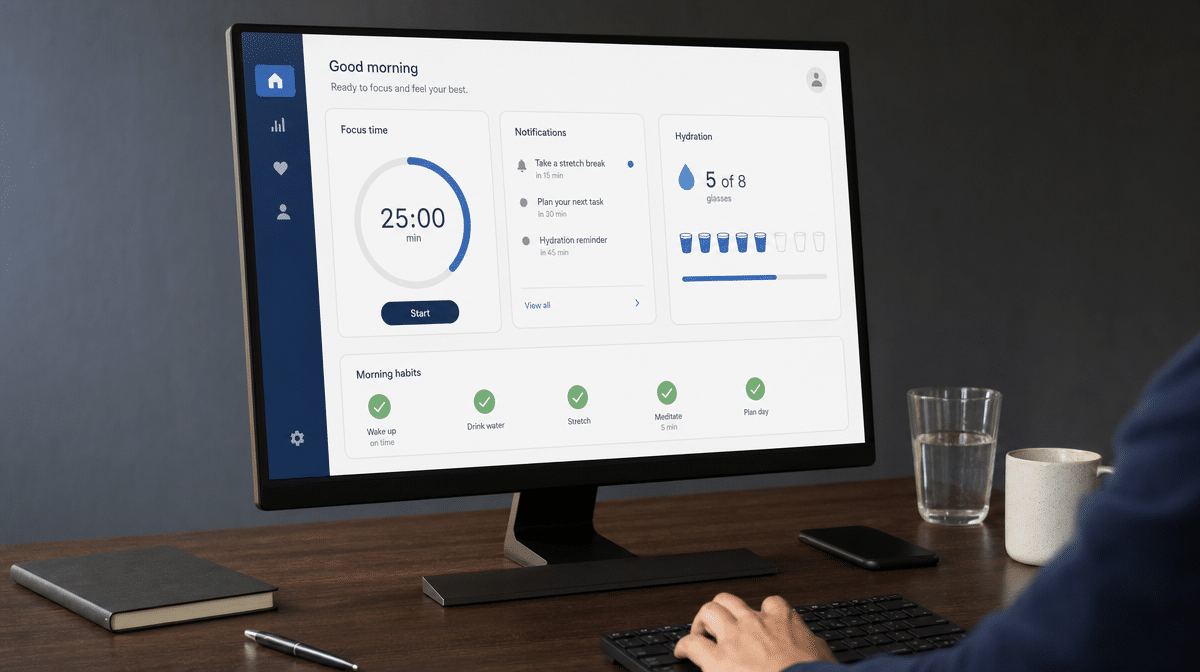
After exercise, pause long enough to hydrate and let the routine settle. A glass of water is a simple starting point. You can relax and reward yourself with one of your favorite drinks after you are done exercising. If coffee or tea is your preference, enjoy it as part of the transition and a modest source of kick-start energy, rather than while rushing between notifications and unfinished tasks.
This brief pause is not wasted time. It separates one activity from the next and gives you a moment to notice your energy before the workday accelerates. Keep the drink, the location, and the length of the pause consistent if that makes the routine easier to remember.
Stay Away From Your Phone
Phones can be major distractors in the morning because every notification encourages a new decision. News, social feeds, email, and chat can consume attention before you have decided what deserves it. You might find yourself spending far longer than intended and achieving nothing connected to your priorities. Once that reactive pattern begins, you may spend the first hour responding to other people’s demands.
Create a boundary that matches your role. You might leave the phone outside the bedroom, keep it face-down during breakfast, or delay non-urgent notifications until after you have planned the day. If your work requires early availability, allow calls from specific people while muting the rest. Dedicate your early energy to positive and stimulating activities instead of an endless feed. The purpose is not to reject technology, but to use it deliberately. Reducing stress can boost productivity throughout the day.
Set Daily Goals
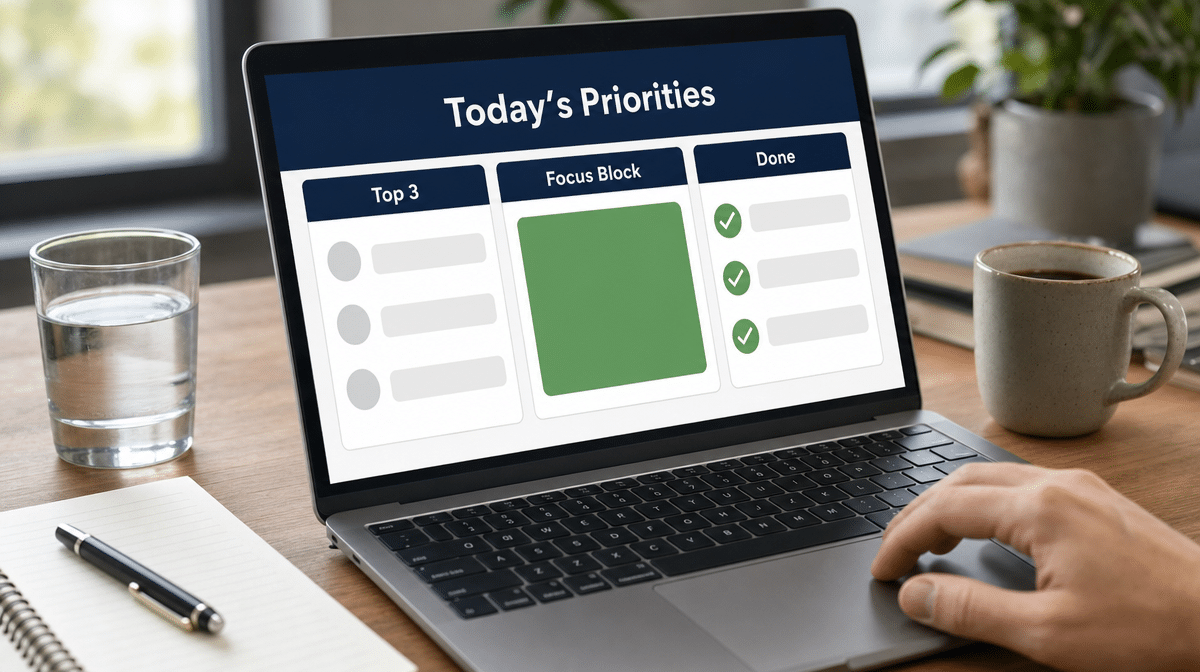
Having a predefined goal always gives you more confidence and a sense of control over your environment and general situation. Use a portion of the morning to decide what you intend to accomplish, what must happen first, and what can wait. Putting these decisions in motion keeps you prepared for possible eventualities before routine requests fill the available time.
Keep the list short enough to guide action. Identify one to three priorities, define the next physical step for each, and reserve a realistic focus block on the calendar. If a goal is too broad, use the principles behind SMART objectives to create goals that are specific and measurable.
Daily milestones also create feedback. Celebrating accomplishing milestones gives you evidence of progress and motivation to continue, while an unfinished item can reveal that the goal was unclear, oversized, or displaced by a genuine priority. Eventually, morning planning becomes a routine you trust and look forward to, not another task you avoid.
Practice Meditation
Mornings can become crowded with several distractions, including messages, obligations, and unfinished work. Practicing meditation gives you a deliberate period to notice those distractions without acting on each one. You can focus on the important stuff you intend to achieve without pretending that meditation will eliminate every competing thought.
You can begin with a few minutes of quiet breathing, a guided session, or the same approach to practicing meditation each morning. The NIH review of meditation and mindfulness evidence explains that some approaches may help with stress or anxiety, while also noting limits in the quality of the research. Treat meditation as a useful practice to test, not a guarantee that distractions will disappear.
Eat a Proper Breakfast
A proper breakfast with a balanced diet can provide a steady bridge into the workday, particularly if you wake hungry or plan to exercise. Choose food that fits your dietary needs and is easy enough to prepare consistently. Eating and hydrating properly can help you feel well energized and respond effectively once meetings and decisions begin.
If you do not enjoy eating early, do not force an elaborate meal simply because it appears on someone else’s morning checklist. Prepare an option for later and focus on a routine that supports your energy. The useful habit is planning nourishment before the day becomes too busy, not following a universal breakfast formula.
How Can You Keep Productive Mornings Consistent?
Begin with two or three habits rather than trying to rebuild the entire morning at once. A consistent sleep schedule, a short period of movement, and a daily priority list may be enough to change how the first hour feels. Add meditation, breakfast preparation, or phone boundaries once the foundation is stable.
Review the routine after a week. Keep what helps you feel prepared, change what creates unnecessary friction, and remove habits that exist only because they work for someone else. Your everyday life does not depend on a flawless morning, but a repeatable start can make focused work easier and improve office productivity once the workday begins. Make use of the above tips that fit your circumstances, and leave room to enjoy life beyond the checklist.
Frequently Asked Questions
What Makes a Morning Productive?
A productive morning prepares your energy, attention, and priorities for the work ahead. It uses a repeatable routine to reduce unnecessary decisions and help you begin important work deliberately.
How Can a Consistent Sleep Schedule Improve Your Morning?
Consistent sleep and wake times make the alarm more predictable and can reduce repeated snoozing. A stable schedule also gives you a clearer window for exercise, breakfast, and planning.
Should You Check Your Phone First Thing in the Morning?
Delay non-urgent notifications until you have identified your priorities whenever your responsibilities allow it. If you must remain available, allow calls from essential contacts while muting lower-priority alerts.
How Much Exercise Is Useful in a Morning Routine?
Choose an amount and type of movement that fits your health, ability, and schedule. A short walk, mobility sequence, or light workout can establish the habit without making the routine too difficult to repeat.
Why Should You Set Daily Goals in the Morning?
Daily goals give you direction before routine requests compete for attention. One to three clear priorities, each with a defined next step, can create control, visible milestones, and motivation.