How to Launch an E-Commerce Business

Launching an e-commerce business is easier than renting a storefront, but it is not easier than running a real business. The products, customers, legal setup, checkout process, payment flow, and fulfillment promises all have to work together before the first order arrives.
Online shopping gives new sellers access to customers far beyond a local market. It also exposes weak planning quickly. If your offer is unclear, your platform is slow, your policies are incomplete, or your delivery process is unreliable, customers can leave in seconds. That is why you should learn how to create and launch your own e-commerce business with the same discipline you would bring to any other startup.
What Is an E-Commerce Business?
An e-commerce business sells products or services through an online storefront instead of relying only on a physical location. It may sell physical inventory, digital products, subscriptions, wholesale goods, private-label items, or products supplied by another vendor. The core work is still business work: choosing a market, creating a trustworthy offer, setting up operations, and delivering what customers bought.
A strong e-commerce business does more than publish product pages. It gives customers a clear online shopping experience, protects payment and customer data, explains shipping and returns, and uses repeatable procedures for orders, service, inventory, and marketing.
How Do You Launch an E-Commerce Business?
Use the following 10-step guide to turn an idea into a working online store. The order matters. Product and market decisions come before the platform. Legal and tax setup come before sales volume. Operations come before aggressive advertising.
1. Know What You Will Be Selling
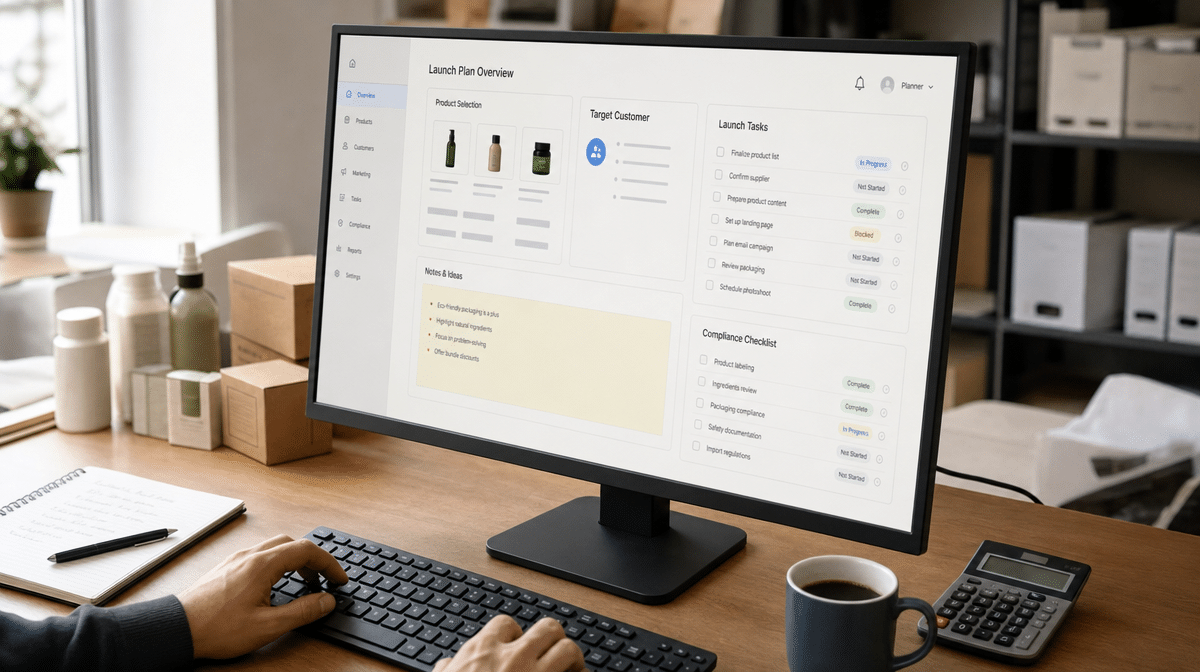
Truth is, you can sell almost anything online, but that does not mean you should. E-commerce is a business like any other, and what you sell, plus who you sell to, matters a lot in your eventual success or failure. Start with a product category where demand exists, margins are realistic, and you understand the customer problem well enough to explain it plainly.
Give thought to the target market, the products you intend to sell, and the type of shopping experience you want your customers to have. Expertise is not a prerequisite for a successful e-commerce business, but it helps if you know a thing or two about the demand and supply of your target products. A narrow product promise that customers understand usually beats a broad catalog that nobody remembers.
2. Choose an E-Commerce Business Name
Choose a unique name that sets you apart from the competition, captures what you sell, and makes sense to the customers you are targeting. A clever name is useful only if people can spell it, remember it, and connect it to the offer.
Before you commit, check domain availability, social handles, state business records, and trademark risk. The U.S. Patent and Trademark Office explains the difference between trademarks, patents, and copyrights, which is useful when you are deciding whether a name, logo, or brand asset needs protection.
3. License Your E-Commerce Business
Different countries, states, and cities have different license requirements. Some sellers need a local business license, seller’s permit, sales tax registration, professional license, import registration, or special permit for regulated goods. You should look for advice from a mentor, attorney, accountant, or local business office before assuming that an online store is exempt from normal business rules.
The bottom line: take time to learn the ropes before applying for licenses and before taking orders. Licensing mistakes are easier to prevent than to fix after revenue, tax obligations, and customer complaints have already started.
4. Get Your EIN
An Employer Identification Number will come in handy later when you are filing taxes, opening a business bank account, hiring employees, or setting up certain payment accounts in the United States. Learn about equivalents of the EIN if you will be operating in a different country.
Even if you start small, separating business finances from personal finances is cleaner. It makes bookkeeping easier, supports tax reporting, and gives your e-commerce business a more professional operating base.
5. Choose a Legal Structure
Your legal structure choices may include sole proprietorship, general partnership, limited liability company, or corporation. Each option has pros and cons, but they all have legal, tax, and financial implications for your e-commerce business.
It is best to seek legal advice from a lawyer and financial advice from an accountant before making your choice. The right answer depends on ownership, liability risk, funding plans, taxes, and whether you expect to hire, import, manufacture, or sell across state or national borders.
6. Choose Your E-Commerce Business Model
Your business model will have a huge impact on your finances and general operations. Common choices include drop-shipping, warehousing and wholesaling, private labeling, manufacturing, digital products, subscriptions, and marketplace selling. Each model changes your cash needs, customer service burden, inventory risk, and delivery promises.
With drop-shipping, you do not own the products and do not store them in your warehouse. Your role is to bridge the gap between the original seller and the consumer. The only investment you may need at first is an e-commerce website, but you still own the customer experience.
With warehousing and wholesaling, you get goods from a manufacturer, keep them in your warehouse, and sell them online. This model requires a bigger investment because you have to rent space, buy goods upfront, manage inventory, and build fulfillment procedures.
With labeling and manufacturing, you own not only the product but the product idea as well. You sell your products under your own brand, which can create stronger margins and differentiation, but it also raises the stakes for quality control, sourcing, packaging, returns, and compliance.

7. Learn Online Business Laws
If you will be selling to overseas clients, you need to understand shipping restrictions, customs rules, data privacy obligations, and tax requirements. If you will be selling someone else’s products, you need to learn about trademark laws, resale rules, supplier agreements, and product claims.
Not understanding the laws can land you and your business in trouble. E-commerce law also touches practical policies: privacy, terms and conditions, refunds, chargebacks, email marketing, subscriptions, warranties, and customer service response standards. Those policies should be written before customers need them.
8. Analyze Your Market and Competition
You have to conduct a competitive analysis before starting a business, whether offline or online. Know who your competitors are, how they price, how they present their products, what they promise, and where customers complain. That research helps you decide what will make your platform credible instead of just available.
Evaluate market viability and analyze your target market to understand your ideal customer. Look at search demand, marketplace reviews, social proof, customer questions, shipping expectations, and repeat-purchase potential. That will help you choose the best approach to appeal to the market.
9. Choose the Right E-Commerce Platform
Choose an e-commerce technology and shopping cart platform that will best serve your model and target market. The platform should be compatible with your business structure, SEO-friendly, reasonably fast, secure, and compatible with the payment gateways and shipping methods you need.
Do not choose a platform by template design alone. Review checkout flexibility, product variants, tax settings, inventory tools, analytics, integrations, customer accounts, discount controls, and support quality. Those details affect whether visitors can become shoppers and whether orders can become repeat business.
10. Set Up the Store and Launch
Now that you have a platform, a model, and a structure for your e-commerce business, build the actual store. Add product pages, product photos, pricing, shipping rules, tax settings, payment methods, return policies, privacy language, customer service contact details, and order confirmation emails.
Before launch, place test orders, review mobile checkout, confirm inventory counts, test refund flows, verify transactional emails, and make sure your team knows who handles each type of customer request. A launch is not only a website going live. It is an operating system starting to serve customers.
How Should You Market an E-Commerce Business After Launch?
Advertise your e-commerce business through the channels where your target customer already spends attention. Email, search, social media, affiliates, partnerships, marketplaces, and content can all work, but none of them will compensate for a weak offer or a broken checkout process.
Learn how to drive organic traffic to your platform and make conversions, but also learn how to retain customers after the first purchase. Clear procedures for order handling, returns, customer questions, inventory updates, and promotions make growth less chaotic. The better your internal process, the easier it is to improve the public shopping experience.
Frequently Asked Questions
What Is the First Step to Launch an E-Commerce Business?
The first step is deciding what you will sell and who will buy it. Product choice, customer definition, and market demand should come before platform selection.
Do You Need a Business License for an Online Store?
Many online stores need some form of registration, tax setup, seller permit, or license. Requirements vary by location, product type, and business model.
Which E-Commerce Business Model Is Best?
The best model depends on your capital, product knowledge, fulfillment ability, and risk tolerance. Drop-shipping lowers inventory risk, while private label or manufacturing can create stronger differentiation.
What Should an E-Commerce Platform Include?
An e-commerce platform should support product pages, secure checkout, payment gateways, shipping rules, tax settings, analytics, mobile usability, and integrations needed for operations.
How Do You Market an E-Commerce Business?
Market an e-commerce business through channels that match the target customer, such as search, email, social media, marketplaces, affiliates, and partnerships. Strong customer service and reliable fulfillment help convert first purchases into repeat orders.