How Do You Write an Accounts Payable Procedures Manual?

Accounts payable is the event that pays for the liability incurred by the purchasing process, which is for supplier purchases or inventory required by manufacturing to meet customer demand. Sales generates the demand that created the accounts receivables, which is turned into cash. How do you write accounts payable procedure manual to support the purchasing policies and procedures manual, to disburse the cash?
Writing an Accounts Payable Procedures Manual

Your accounts payable procedures are a bit different then the other accounting processes. Those other accounting cycles represent processes where the focus is on reducing the size of assets (inventory or accounts receivable procedure) or expenses (marketing) and increasing the cycle time (faster turns).
Focus on Increasing Accounts Payable Velocity
In accounts payable, our focus is on increasing the size of assets while maintaining a solid credit rating and increasing the process velocity. Now, let’s look at how to find $250,000 in accounts payable savings.
If your organization has $500,000 in accounts payable each month…STOP! We can find $250,000 in savings right here! “Where?”, you ask. Increasing payables velocity by 25% will produce $125,000 in cash plus $125,000 from automating tasks using AP automation software, taking more discounts, and managing the process better.
Payable Procedures Case Study
An organization with $600,000 in monthly payables needed assistance. We examined their payables process to understand and quantify workflow, paper processing, and credit issues.
We then designed and implemented a process to increase their use of payables and discounts, improve their payables cycle efficiency, and tie it to their purchasing and receivable cycles. And then reinvested $50,000 back into an Enterprise Resource Planning (ERP) program to automate some of the processes that weren’t automated already.
The purchasing metrics we developed reduced their purchasing and payables expenses by 25% and increased their efficiency from 50% to 75% within 2 months of implementing the new procedures. With these new processes and reports, the company now tracks payables cycle efficiency and average days payables.
This is an improvement over tracking bills paid on time or outstanding balance as the measure of their payables effectiveness. The result: an extra $300,000 in cash, plus a 50% increase in process capability (capacity).
But…how?!
9 Methods to Help Your Accounts Payable Procedures
The single biggest cost for accounts payable procedures (or any purchasing and payables department) is paper, including: purchase orders, purchase order follow-up, small-dollar purchases, delivery tracking & receipts, and vendor payments. Let’s look at a few methods to help with your accounts payable procedures.
Use Electronic Invoices
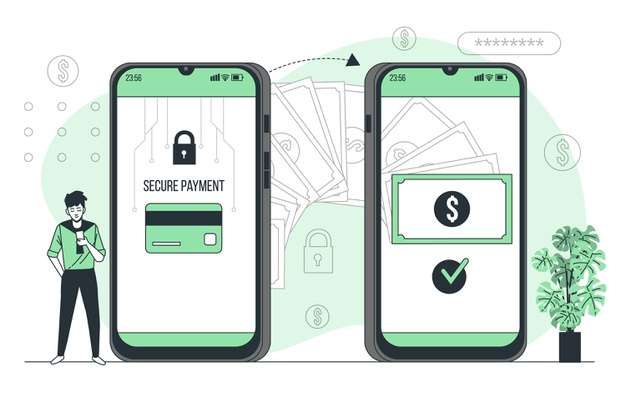
Utilizing electronic invoices, Web-based supplier self-servicing, centralized vendor files, automated workflows for electronic or imaged invoices (see ERP below), and payment methods, such as business credit cards, Electronic Data Interchange (EDI) and Electronic Funds Transfer (EFT), can reduce paper handling costs by as much as 90%.
Integrate ERP Systems
Enterprise Resource Planning (ERP) automates the purchasing and payables functions, which allows a company to get more work done with fewer personnel. Also, electronic invoice matching applications save time in retrieving paperwork. It is estimated that an ERP system can annually save an organization $300 per million in sales.
Increase Payables Payment Terms
Negotiate payment terms based on receipt of goods or the invoice. This can add one week or more to your terms, which can be 25% of 30 day terms. Use EFT for just-in-time payments to maximize your payables terms and minimizing the impact to your credit.
Take Payable Payment Discounts
If you are getting 2%/10 net 30 terms, then consider taking it. This means you are offered a 2% discount if you pay within 10 days, instead of the normal 30 day terms. This translates into an 18% return on your capital, and for many organizations this is a good return on your investment (ROI).
Review Purchases Before Paying
Purchasing is a continuous process that requires continuous review, BEFORE you pay and disburse the cash. Consider: transportation charges, expedited fees, odd lot penalties, new pricing, new products, consolidating vendors, new vendors or buying groups, payment terms, and more.
Communicate with your suppliers to improve the process. And review and monitor everything to account for changes in your environment.
Communicate with Suppliers
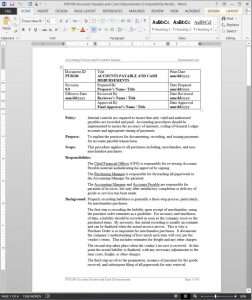
Communicating with your suppliers will help your accounts payable procedures. Ask suppliers to submit their invoices electronically. This will save you time entering your accounts payables invoices, people resources and losses due to waste and errors.
Eliminate Payable Disputes
Disputes with your suppliers are typically the result of a problem with your (or your suppliers) purchasing/receiving process. When disputes occur, review your purchasing procedures to ensure that they are producing the correct metrics and that you are not forced to pay for your mistakes.
Reduce Payable Errors
Overpayments, payments made to the wrong vendors, fake invoices, or even late payments represent a common problem for accounts payable procedures. Increasing your focus on error control, along with written procedures and audits, can reduce these errors considerably.
Train Payables Personnel
Provide your accounts payable staff with regular formal training. This will arm them with better knowledge of frauds, negotiating skills, and an understanding of the economics of payables, which will result in improved effectiveness.
Write an Accounts Payable Procedures Manual
Writing an accounts payable procedures manual is critical to the cash disbursement process. The focus is now on increasing the size of assets, while maintaining a solid credit rating, and maintaining solid cash flow. Time is the key. All you have to do is own it.