Best AI Agent for Property Management Procedures
The best AI agent for property management cannot follow a procedure you have not written. That is the whole answer, and it is why most small property management companies get disappointing results from AI in the first month.
This page compares the AI agents and tools that are genuinely useful for running documented property management procedures in a smaller business, and it is honest about the point where a written manual and a shared checklist beat every subscription on the list.
This page compares the AI agents and tools that are genuinely useful for running documented property management procedures in a smaller business, and it is honest about the point where a written manual and a shared checklist beat every subscription on the list.

The scenario we used
A company managing a few hundred units with three to five office staff. There is a written move-out procedure, but only two people actually follow it. The owner wants the same answer every time, and right now the answer depends on who picks up the phone.
How we judged each option
Migration effort, approvals, auditability, the skills required to run it, and whether a written manual alone would have done the job. Tools that assume an enterprise budget or a dedicated IT team were left out, because that is not who reads this.
Comparison at a glance
| Option | Best for | Migration effort | Approvals | Auditable |
|---|---|---|---|---|
| A written manual and checklist | Procedures that are not written down yet | None | Manual | Yes, if kept current |
| Process Street | Running written procedures as tracked work | Low to medium | Built in | Yes, every run recorded |
| Dash | Work spread across several systems | Low, joins your chat tool | Required before anything goes out | Yes, names its sources |
| LeadSimple | One operational home for a growing company | Medium to high | Process driven | Yes |
| Property Meld | Maintenance depth | Medium | Process driven | Yes, for maintenance |
| OpenAI Codex | Building software | Developer tool | Not applicable | Not for this job |
| Claude Code | Building software | Developer tool | Not applicable | Not for this job |
Prices change constantly and several of these vendors do not publish one at all, so this table does not carry a pricing column. Each tool below links to its own pricing page where it has one.
Disclosure
Dash and Process Street are sister brands to this publication. They are included because they fit the scenario above, and each entry states plainly where it is the wrong choice. Weigh the placement accordingly and check every claim against the vendor.
The best AI agents for property management, ranked for this reader
1. A written manual and a shared checklist
Not a product, and for a lot of readers the correct answer this year. If the move-out procedure lives in one person’s head, an agent has nothing to follow. A written procedure plus a shared checklist that everyone actually opens will fix more of your week than any subscription.
Best for: a company whose procedures are not written down yet
Best for: a company whose procedures are not written down yet
Features
- Costs nothing beyond the time to write it
- Works whether or not anyone adopts new software
- Becomes the input every later tool needs
- Survives staff turnover
Pros
- No migration, no training, no integration
- Immediately auditable
- The prerequisite for everything below
Cons
- Nobody chases it for you
- Goes stale unless someone owns it
2. Process Street

A workflow and process platform. You write the procedure once as a template, then run it as a checklist with conditional logic, approvals and an owner on each step. It keeps a record of who did what and when, which is the part a spreadsheet never gives you.
Best for: turning written procedures into something the team actually runs
Best for: turning written procedures into something the team actually runs
Features
- Templates that run as trackable checklists
- Conditional logic so the process adapts
- Approvals and per-step ownership
- A complete record of every run
- Connects to the tools you already use
Pros
- Bridges the gap between a document and real execution
- Auditable by design
- Agents can execute against it later
Cons
- Someone still has to write the procedure first
- More than a small team needs if you only have two processes
Check out the pricing plan for Process Street.
3. Dash
An AI teammate that works inside Slack or Microsoft Teams. It reads across the tools the office already uses, prepares the work, and then stops. Anything that goes out or spends money comes back for a person to approve. It connects to more than 3,000 tools, and where no connector exists it can work through the browser.
Best for: a team losing its week to carrying information between systems
Best for: a team losing its week to carrying information between systems
Features
- Lives in the chat tool your team already uses
- Reads across mail, documents, spreadsheets, accounting and property software
- Approval required before anything leaves the building
- Names the sources behind every number
- Property management connectors for some systems, others on request
Pros
- No new tool for staff to learn
- The approval gate makes it safe on live data
- Useful across several functions rather than one
Cons
- Needs a defined procedure to be consistent
- Connector coverage varies, so check your own software first
Check out the pricing plan for Dash.
4. LeadSimple
A property management CRM and automation platform. It puts leads, calls, processes and work orders on one system and one timeline, with a shared inbox, VOIP and maintenance included.
Best for: a growing property management company that needs one operational home
Best for: a growing property management company that needs one operational home
Features
- Leads and calls in one timeline
- Process automation with owners per step
- Shared inbox and phone
- Work orders and maintenance included
Pros
- Built specifically for this industry
- Replaces several disconnected tools
- Processes and records in the same place
Cons
- A platform move, not an add-on
- Overlaps with a system of record you may already have
Check out the pricing plan for LeadSimple.
5. Property Meld
Maintenance software for maintenance operations. It runs repairs, coordinates technicians and vendors, and keeps residents and owners informed.
Best for: a company where maintenance is the single biggest drag
Best for: a company where maintenance is the single biggest drag
Features
- Work order intake and triage
- Technician and vendor coordination
- Resident and owner communication
- Maintenance reporting
Pros
- Deep in one function rather than shallow across many
- Directly targets the most common complaint
- Clear operational ownership
Cons
- Does nothing for leasing, arrears or owner reporting
- A second system alongside your main one
Check out the pricing plan for Property Meld.
6. OpenAI Codex
A coding agent. It reads a repository, makes changes and runs tasks in the terminal and the cloud. It is on this list because small business owners keep being told to try it, not because it does this job.
Best for: companies that build their own software
Best for: companies that build their own software
Features
- Reads and edits a codebase
- Runs tasks in a terminal
- Works locally and in the cloud
Pros
- Genuinely excellent at software engineering
- Fast for developers
Cons
- Not designed for documented business procedures
- Assumes a wrong move can simply be undone, which is not true of a rent notice
7. Claude Code
An agentic coding tool that reads a codebase, edits files and runs commands across a terminal, an editor, a desktop app and the browser. Same category as Codex and the same answer for this job.
Best for: companies that build their own software
Best for: companies that build their own software
Features
- Plans changes across a codebase
- Edits files and runs commands
- Works in several developer surfaces
Pros
- Strong at engineering work
- Plans before it edits
Cons
- Lives in the codebase, not in your office systems
- No understanding of your written procedures
How to decide in one pass
Ask three questions in order, and stop at the first no.
- Is the procedure written down? If not, write it. Nothing below works without this and it is the cheapest step you will take.
- Does one system hold it, with owners and approvals? If not, a process platform is your next purchase, not an agent.
- Is the remaining pain the work between systems? That is the only point at which an AI agent is the right answer, and it is a real one.
Most companies that are disappointed by AI skipped the first two questions. The agent was never the problem.
Frequently asked questions
Do I need the best AI agent for property management, or just a written procedure?
No. If your procedures are written down and one system holds them, you already have most of the benefit. An agent helps when the work is spread across several systems and someone spends their week moving information between them.
What is the cheapest way to start?
Write one procedure down, the one your office repeats every week and nobody enjoys. Run it as a shared checklist for a month. That costs nothing and tells you whether software is your actual problem.
Can an AI agent send messages to tenants and owners?
It should not do so unsupervised. The safe arrangement is that the agent prepares the message and a person approves it before anything is sent.
Will a coding agent like Codex or Claude Code help my property business?
Only if you build software. They are excellent engineering tools that work inside a codebase, and they are not designed for documented business procedures.
How do I know if a tool connects to my property software?
Ask for the connector list and read the status beside each name. A logo on a marketing page can mean live, planned, or available on request, and those are very different things.
What should I write down first?
The procedure that causes the most arguments. Usually move-outs or owner reporting, because both involve money and both have several people touching them.
The bottom line
Buy the written procedure first, the system that runs it second, and the agent third. Done in that order every step compounds. Done in reverse you get a very capable assistant guessing at a job nobody ever defined.
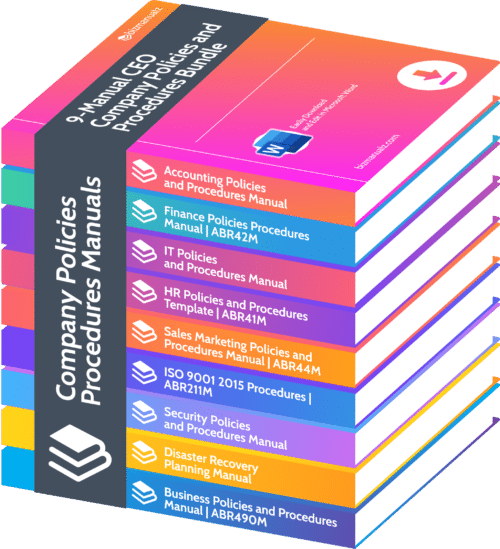
Bizmanualz publishes pre-written policies and procedures manuals if you would rather start from a written baseline than a blank page.
For a broader agent decision beyond property management, compare Claude Cowork alternatives for controlled procedure work before choosing a desktop coworker, chat teammate, or visual builder.