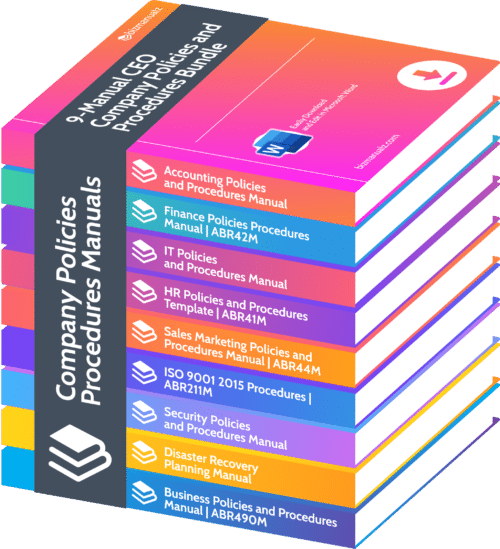
Buy Policies and Procedures Manuals for Your Entire Company

CEO Company Policies Procedures Series

CEO Company Policies Procedures Manuals

Save 45% when you buy the CEO Series. It covers the ten core business processes and comes with nine fully-editable manuals for:

  • Sales & Marketing Tactics
  • Security Planning
  • Disaster Recovery
  • ISO Quality Procedures
  • Accounting Procedures
  • Financial Policies
  • IT Policies/Procedures
  • HR Procedures
  • Business Sampler

««Blog Home

Steve Flick's Blog Posts

10 Qualities of Great Leaders

Posted on 08-30-2010

One question asked endlessly in business, academic, political, and other circles is, ”What’s the difference between a manager and a leader?

The most often quoted answer seems to be, “The manager does things right - the leader does the right things.” What exactly does that mean - “doing the right thing”?  Does that mean history tells us whether the leader did the right thing? Can someone be a leader even if they end up on the losing side?

A leader is one who knows that though the risk of failure may be great, they don’t give up on themselves or others. Leaders are people of exceptional character who are capable of bringing others through a crisis. All leaders share certain qualities or characteristics, including:

1. Self-respect and respect for others. If you don’t have a healthy self-respect, you won’t respect others. If you don’t respect others, they will not respect you. You can’t lead people who don’t respect you.

2. The ability to communicate effectively. Leaders say what they mean and mean exactly what they say. Effective communicators are far more persuasive than those who don’t communicate well.

3. Integrity and character. Leaders are not swayed by unsubstantiated opinions or unfounded rumors. Fame, power, or material gain don’t motivate them. Leaders have integrity, that strength of character that resists assault.

4. Having a vision, a mission (or a purpose), a sense of direction, and a clear set of goals. Moreover, they know that their job isn’t done when one set of goals is reached. Leaders know that life is a journey.

5. Being grounded. Leaders have a vision of what the world around them ought to be, but they are also pragmatic. Things will not always go smoothly, but leaders understand that and have the presence of mind to deal with that.

6. Courage. Fear is a powerful motivator; it causes many of us to turn away from our goals when our belief in ourselves and our cause isn’t strong. Leaders aren’t fearless — leaders make a conscious choice to act in spite of their fear.

7. Persistence, commitment, and dedication. It’s like they always say: “Winners don’t quit, and quitters don’t win.”  Nothing worth having comes easily. When setbacks crop up, leaders don’t flag because they always have their eyes on the prize.

8. Humility. Leaders aren’t self-promoting or self-aggrandizing. They don’t take all the credit. They give credit to others and refuse it for themselves.

9. A sense of responsibility. Leaders are willing to bear the ultimate responsibility for their undertakings. They don’t point the finger of blame when things go awry.

10. Decisiveness. When action is called for, real leaders don’t waffle. Knowing that a window of opportunity exists (”the time to act is now”), they act quickly and effectively, based on the best available information.

Most importantly, leaders have these characteristics in balance. Some may tell you there is one characteristic more important than the rest. They’ll say something like, “Oh, you have to have that ‘vision thing’ above all else.” Not true - people won’t follow someone who has vision without courage or humility, for example.

What about you? What do you think are the most important qualities in a leader? Who do you consider a leader and why?

Thanks so much for your time.

Crisis Management or Risk Management: Which Is More Important?

Posted on 08-23-2010

It seems for the last couple of years as though we’ve been constantly running in crisis mode. To put it mildly, the worldwide economic situation got out of control 2-3 years ago and it doesn’t show signs of improving soon. Uncertainty abounds, fingers are pointed in every direction, and many of us feel powerless to do anything but wait and worry.

“What? Me worry?”
Alfred E. Newman

Crisis Management Is a Response…

The economic crisis has occurred and whether it was through our fault or not, we have to get it under control and fix it quickly as possible — that’s what crisis management is. Depending on the nature and extent of a problem, it may take considerable resources to fix. As we’ve seen, our current economic crisis has used up an enormous amount of resources and promises to swallow up many more before we even come close to a solution.

Unfortunately, it looks like many companies — but especially small-to-medium businesses – will simply have to do their best to ride out the economic storm. Too much is beyond their knowledge or control.

…Whereas Risk Management Is Strategic

Many people have laid the lion’s share of the blame for the economic crisis on the financial sector, or on government policies. Certainly they weren’t the only causes, however. Companies in every sector took unnecessary risks and didn’t implement a system of effective controls and oversight. Good risk management practices existed but they weren’t followed.

Risk management consists of identifying potential threats, assessing their likelihood and their impact (if they were to occur), and taking the necessary steps to eliminate or minimize risks. There are risks we’ll always be powerless to avoid or control (severe weather, earthquake, etc.), but we can cope with them — and many others — better simply by implementing effective risk management systems.

Management Philosophy

There is a management philosophy, mirrored by ISO 9001, that merely correcting a problem isn’t as good as identifying its root cause and taking steps to make sure the problem doesn’t recur. That’s called “taking corrective action“.

That philosophy also says that making sure a problem doesn’t happen again isn’t as good as preventing it from happening in the first place (aka, “preventive action“). It follows, then, that risk management is markedly preferable to crisis management. This is not to say you shouldn’t prepare to manage crises (after all, the best-laid risk management plans aren’t going to prevent every crisis…like they say, “Stuff happens”) but that crisis management should be your fall-back position.

Comments, anyone?

The 10 Best Reasons for Writing Procedures

Posted on 08-16-2010

Why DO we write procedures? Anyone? (”Because we HAVE to!”)

Well, that’s one reason, though it’s not the best one. (”What do you mean, ‘not the best one’? The law says we need written procedures to be in compliance. If we’re not in compliance, we lose business.”)

Believe it or not, there are many excellent reasons to write procedures, and complying with regulations or standards, while it may seem the most important reason (because of the potential for fines and other penalties), is actually pretty far down the list. The best reasons for writing procedures include:

  1. Documenting and analyzing process results in order to improve the process (in other words, you know if a process is getting better or worse by taking measurements and comparing them);
  2. Communicating how you measure the effectiveness of a process (i.e., what your expectations are for the process (pieces per hour, zero defects, etc.));
  3. Decreasing process error rates (moving the process closer to Six Sigma performance level);
  4. Making it easier to replicate a process (that is, regardless of who’s working at it or when, the process remains the same);
  5. Retaining and transferring valuable knowledge;
  6. Documenting — and sharing — risks, hazards, and “lessons learned”;
  7. Reducing the time you need to train (or retrain) workers;
  8. Improving the consistency of process results (another way to put it is “your customers don’t like surprises”);
  9. Simplifying access to — and understanding what is — important information; and
  10. Solidifying the foundation for your company’s growth.

So, what do you think? Did I miss something? Do you know any other reason why written procedures make sense?

Like I say when someone wishes me good luck, “I hope it doesn’t come down to luck…but I won’t turn it down if it comes my way.”

Writing Procedures: The 10-Step Program

Posted on 08-09-2010

When many of us see change coming, we’re not sure what to do.  We sometimes fear or mistrust change, or we put off big problems because they’re “too much all at once”, and we stick with outdated, inefficient tools, methods, and processes.

Better the devil you know than the one you don’t.
Anon.

We sense that the way we go about developing policies and procedures isn’t producing satisfactory results, yet we keep at it. We can’t afford to continue doing what we’ve been doing if we’re to remain competitive.

Now we proceed with the ten-step program for developing procedures:

  1. Understand the process – walk through it (literally) and map it out. See for yourself where the bottlenecks are. Determine where your resources are going to waste, not value. If an activity doesn’t add value, customers won’t pay for it.
  2. Estimate the resources you need to craft the procedure (people, time, etc.). Set your goals and milestones.
  3. Now, document (author) the process.  For the best effect, combine pictures and words: either is good but together, they’re great!
  4. Once you author the procedure, have the process “doers” and their manager review it.  Note: Here is where a document management system can improve your review process.
  5. Based on the results of the procedure review, revise the procedure.
  6. Repeat #4 and #5 once. Resist the urge to keep “tweaking” documents before releasing them – there is no such thing as a perfect procedure.
  7. Next, have other interested parties review the procedure (for example, the managers of the processes immediately before and after the process in question).
  8. Revise the procedure one last time, if necessary.
  9. Gain final approval of the procedure from top management. In the case of a small business (or SMB), that might be the owner, the president, your chief financial officer, and others.  Top management needs to be involved because every process – hence, every procedure – is a reflection of the company’s vision, mission, and objectives.
  10. Once the procedure is approved, release it to the company.  Releasing a procedure involves:
  • Announcing the procedure to the entire company;
  • Circulating it, or making sure it’s readily accessible to employees;
  • Training the doers – those responsible for carrying out the procedure, and their managers; and
  • Explaining the procedure to those who may be affected indirectly (for example, one process forward and one back).

Keep Procedures Fresh and Meaningful

As we said in step #6, perfect procedures don’t exist. The business environment changes, your company changes, and your procedures need to reflect that. Once you’ve released a procedure, there are two more things you must do:

11. Conduct a periodic procedure review. You review a procedure when something really big comes up that has a direct impact (a new or revised regulation, an audit finding, a new owner, etc.), correct? Oftentimes, nothing comes up – or we don’t notice when they do. That’s why we need to routinely review procedures (a rule of thumb is to review annually).

12. After the review, revise the procedure (if needed), review it, approve it, and release it.

What about you? Have any questions or comments? What do you – or would you – do differently? Do you have a system for writing and managing procedures – one you’d like to share with us?

10 Keys to Capping the Oil Problem for Good

Posted on 07-26-2010

Rumors are flying around the Internet that British Petroleum is considering removing Tony Hayward from the company’s top post. Apparently investors like the idea, as BP’s stock price has steadily risen since the rumors began.

People may feel like it’s a good start, as Hayward seems to have become a greater liability than an asset to the oil giant. However, one grand, symbolic gesture — one more sacrificial lamb — doesn’t get to the root of the problem. We have much further to go. Hayward is at the top of the company but the failures that led to the oil catastrophe have not nearly been all his or his company’s doing.

BP’s failure was part of a systemic failure: there is plenty of blame to go around. Rather than blame everybody (which helps no one), we have to correct the system in which this fiasco occurred or devise a new system.

Where to start?  We might take care of the problem this way:

  • Compile lessons learned and share them with the industry.
  • Rewrite industry (and other) standards to put a greater emphasis on safety.
  • Enforce existing regulations before writing new ones.
  • When writing a new bill (and this goes to any bill, not just those dealing with oil and gas), the legislature cannot be allowed to hide laws by combining them, related or not. One bill for one issue.
  • Spend money on enforcement (i.e., hire qualified people, train them well, and pay them what they’re worth).
  • Break up the MMS and organizations like it. The Materials Management Service has been responsible for gathering rights fees, etc., and they’ve been responsible for enforcing oil-and-gas-related statutes and requirements. Often, these two work at cross-purposes: as we saw, the MMS didn’t want to enforce laws that might put the brakes on revenue. Those functions have to be kept separate so there’s no confusion about what’s important.
  • Restore “reinvestment in the company” as a business tenet. Paying out profits to shareholders and executives while infrastructure and technology lag isn’t sustainable.
  • Fine anyone or any organization that misled anybody at any point (misinformation, late or no information, deflecting blame, covering up problems, etc.). This alone could raise enough money to put the issue behind us.
  • Get the world on the same standards. It’s too easy for a company to say, “We don’t like the tax laws here, so we’re moving offshore” or “It’s cheaper to operate “over there”, so we’re going over there.” Artificially low wages and taxes, as well as lax standards and enforcement, relocates the problems and potentially intensifies them. Relocating a problem doesn’t solve it and it can create more.
  • Accept responsibility. Management can certainly do its share but so can the rest of us. We need to find our collective moral compass and use it all the time.

Do you have any suggestions or ideas for preventing a recurrence of this unfortunate situation? What would your corrective or preventive actions be? Should compliance with ISO 9001 and ISO 14001 be required of all oil and gas companies (and their subcontractors)? Should policies and procedures be transparent?

Thanks for your time.

7 Keys to Motivating Better Performance from Within

Posted on 07-19-2010

A little while back, we wrote about the keys to improving employee performance. The issue of performance was discussed from the manager’s viewpoint.  Managers often have a lot to do with their employees’ performance, or so conventional wisdom goes. They’re responsible for motivating their employees to turn out quality and perform at their best, as well as for organizing, training, and so forth.

However, motivation is a “soft” skill that many managers just don’t come equipped with. Some have never been instructed at length on the topic of motivation, and it’s not a skill one easily picks up on their own.  Therefore, many employees need to motivate themselves from within. If not, they lose interest and momentum.

So how do you, as the employee, take the initiative when your manager is unable to provide it?

1. If your manager does not provide you the “what, when, and why”…ask! Valuable project time is lost when employees don’t have a clear sense of purpose or direction.

Ask your manager for an example of what the finished product should look like. What are the project objectives? Are they SMART objectives? What are the milestones? Do you understand what’s expected of you?

2. Continually ask for your manager’s feedback. Don’t allow your manager to isolate him or herself. The manager may say, “You handle it”, but do they really mean it? Project review should be a required part of every process — in fact, the quality standard, ISO 9001mandates reviews! Always ask (of yourself and your manager) what can be improved.

3. Be honest about your skills and training. Do you have enough for the job in question? If not, can you get more — or more specific — training? Can anyone mentor you in this area? And does the company have a training plan in mind for you?

4. Assess your resources. Specify what you will need to complete the project. Ask your manager how resources will be allocated and be sure you will be adequately supplied.

5. If a problem (setback) occurs, tell your manager as soon as you have the facts to rationally discuss the case. Present the facts clearly and logically. Present opinions, too, but be sure not to pass them off as facts. Try to offer one or more potential solutions, as well.

6. Be an influential team member. Be part of the team. Don’t hold back on any of your ideas. Each team member must contribute something to the success of any project…otherwise, it’s not really a “team project”, is it?

7. At the end of the project, ask your manager for feedback. There is always room for improvement, so learn from the praise and the criticism and incorporate it in subsequent projects.

You can’t always rely on others to provide you the guidance and incentive you need to be an outstanding performer. Sometimes you have to take the initiative.

So, what do you think? What makes your employees outstanding performers? Is it that they’re strongly self motivated, or that they’re well managed? Or is it something else we didn’t discuss here?

Let us know what’s on your mind.

7 Easy Steps to Great Policies and Procedures

Posted on 07-16-2010

I wonder how many of our clients, on receiving our policy-and-procedure manuals, have asked themselves what in heck they got themselves into. (”There’s a lot of stuff here…where do I begin?”) Well, like a lot of things, it’s probably not as difficult as it looks initially. First, you took a step in the right direction by using our templates to develop your company policies and procedures. It’s always easier to start with some of the work already done for you, rather than you having to start from scratch.

Now, how do you proceed?

Understand Why You Need Policies and Procedures

You don’t need policies and procedures merely to comply with regulations or industry standards (like ISO 9001). Sure, there’s nothing quite like the threat of fines, legal action, and the scorn of the business community to motivate you, but that’s far from the best reason. Much better reasons for developing policies and procedures include:

Prioritize Your Needs and Set Goals and Timelines

Now that you understand “why”, you need to decide “what”.  Of the policies and procedures you could work on, you have to determine which one(s) are going to provide:

  • The biggest bang for the buck;
  • A quick return on your investment; and/or
  • The greatest good for the greatest number.

Only you know what you need.  I can offer you suggestions (like “start with a fairly simple process”) but only you have the intimate, day-to-day knowledge of your organization. It’s your company: you decide.

So, decide which process you’re going to document first.  If you have absolutely no idea (you have no metrics and no historical basis for evaluation), try any Bizmanualz policy or procedure.  Document your initial design and development process and use it as a baseline for further development.

Give the first procedure a fair evaluation.  Don’t look at your first policy-and-procedure development, point out all the flaws you can find, declare the project an abject failure, and pull the plug.

Introduce discipline into the development process by setting clear and meaningful (aka, “SMART“) goals and timelines.

Analyze Your Existing Procedure

If you already have a de facto1 procedure in place, don’t throw it out in favor of so-called best practices that may or may not work for your firm.

If it ain’t broke, don’t fix it.” (Anon.)

Now is as good a time as any to document your process.  Diagram it quickly in any manner and medium with which you’re comfortable. Simple is best (“Don’t make a big production out of it!”, Mom used to say).  Next…

Compare Your Process with Bizmanualz Best Practices

Bizmanualz has already looked at many companies’ procedures, blended them together to describe “best practices”, and reasonably modeled these procedures on the Deming, or “Plan-Do-Check-Act”, cycle. You may find that your procedure already looks very much like the PDCA model:

  • You develop a set of objectives and a plan (process) for realizing those objectives;
  • You implement the plan and immediately start collecting process data (in-process, end-of-process, etc.);
  • You routinely analyze the data, to see if the process is performing in line with expectations; and
  • You make changes to the process (procedure) in order to improve it and improve your results.

If that’s the case, you don’t have far to go at all. Next…

Make Our Procedure Your Procedure

Make the obvious and necessary changes to the Bizmanualz policy and/or procedure.  We wrote them generally, like ISO standards, so they’d have the widest possible application.  Any resemblance between our procedure and your process is coincidental; that is, you’ll have to customize our procedures – make them your procedures.  For example:

  • Change every instance of “Bizmanualz” or “the company” to your company;
  • Where you have an existing form (e.g., purchase order, customer order, invoice), use it – and make sure field names, etc., on the form and in the procedure agree;
  • Change job titles in the “Responsibilities” section and in the procedure itself to reflect your circumstances;
  • Change diagrams2 as needed;
  • Add visual aids – they add impact and meaning and they complement verbal descriptions very well (especially when they come from your office, your shop floor, your staff, etc.); and
  • Leave out what you don’t need.  An entire procedure or just part of one — if it doesn’t apply to your situation, delete it.  Make your policies and procedures simple and direct.

Verify and Validate the Procedure

The people responsible for implementing the procedure have to put it to the test.  Oh, you could write a procedure and thrust it on an unsuspecting workforce but until it’s subjected to “real world” conditions, the results you see may not be the ones you want or expect.

And there’s more to it than procedure verification and validation. Some people call it “getting buy-in”. Whatever you call it, recognize that your employees are stakeholders in the company. They have a vested interest in the company, too – if it does well, they do well. So, keep them in the loop on matters that directly affect them, to ensure their understanding and cooperation.

Even if they’re not directly impacted by the procedure in question, keep all employees informed of this — and most — company matters.

Implement the Procedure

Now, publish the tested-and-verified procedure.  Distribute the procedure to those responsible for executing it, analyzing it, and training employees.  NOTE: A document management system, or DMS, will help you address publication and distribution, as well as improve document control.

Hold a training session on the procedure – make sure trainees are not only capable of doing the work, but that they understand the process and the objectives, as well.  Finally, execute the process.  Collect the data from measuring devices and routinely analyze it.  Look for anomalies and trends in the data, evaluate the process, and aim for continual improvement.

Yes, ladies and gentlemen, it’s just that simple! Any questions?

NOTES

1Just because you haven’t documented it doesn’t mean you don’t have an effective process in place.  Example: my wife and I came to a quick understanding some time ago that I would clean tubs, showers, and toilets and balance the checkbook. It’s very effective, plus there’s no point in documenting such processes because (a) they’re easy and (b) she won’t ever do them.

2We’ve been using Microsoft Visio to build diagrams. Unfortunately, Visio is not automatically included with any version of MS-Office, so far as we know. There are many alternatives to Visio, though – any search engine will help you find them – so your organization need not be constrained by a lack of Visio3.

3No, that’s not a typo.

When Do We Put Quality FIRST?

Posted on 07-02-2010

Remember when Ford’s tagline was “Quality Is Job 1″? No? Well, maybe this will jog your memory.

Back in the 1980’s, Ford, GM, Chrysler, and AMC1 were quickly losing ground to Japanese automakers2. Rumors that U.S. auto workers were deliberately sabotaging cars on assembly lines gained traction; these rumors were alleged to have been started to divert attention from the obvious and growing inequities between American and Japanese vehicles.

Fact is, American car buyers were turning away from domestic cars simply because their Asiatic counterparts were cheaper to buy and much cheaper to operate. The bad reputation American cars were saddled with then — a consumer perception of poor quality — persists to this day, even though Toyota — which leapfrogged all American automakers in 2007 to become the world’s #1 vehicle producer precisely because of its reputation for quality — has turned out to be the modern-day emperor with no clothes.  It looks as though quality took a back seat to profits.

Then there’s BP, whose failed wellhead in the Gulf of Mexico “will live in infamy”3, mainly because it appears the company would not spend a little on safety because that might eat into profits. This story has been thoroughly covered in the news, on blogs (including ours), and in company emails.

Now add the computer maker Dell to the list. Dell is now in court for allegedly selling millions of defective computers from 2003-2005 — computers that it supposedly knew were defective — hurting companies that relied on its reputation for quality manufacturing and customer service.

What’s the common thread running through all of these cases? Corporate hubris? Maybe.  A message running throughout these companies that “quality be damned — just get it out fast and make a big profit”? Quite possibly. Is their profit more important to you — the consumer – than a quality product and your satisfaction?

When do we, as consumers, demand that quality be placed before price? It catches up with the producer — eventually — but why wait for the inevitable? Why chase the elusive promise of “newer and better”? (Look at what Apple’s going through with the iPhone 4.)4, 5 Also, when do we, as corporate citizens, begin to see that our responsibility to give our customers quality isn’t incompatible with healthy profits?

It’s often said that we get what we deserve. If you think you deserve better, demand — and hold out for — quality.

Notes:

1 Yes, they were still around, though not for long. AMC was put down for good in 1988.

2 Except for body rust; that problem plagued Japanese auto makers for decades. My first two new vehicles were Japanese-made and I logged 18 years and several hundred thousand miles between them. If not for the severe case of “car cancer” they both caught, I believe they would’ve given me 20 or more years, combined.

3 My apologies to the late Franklin D. Roosevelt only.

4 http://abcnews.go.com/Technology/apple-iphone-hit-class-action-suit/story?id=11066239.

5 http://news.cnet.com/8301-30677_3-20008919-244.html.

Further Reading/Viewing:

  1. Enderle, Rob, “Dell and the Cost of Cover-Ups“, IT Business Edge post, 30 Jun 2010.
  2. Evans, Joel, “Is Apple Covering Up the Real Problem with Its iPhone?“, ZDNet blog post, 4 July 2010.
  3. Product Recalls“, Back in Black, The Daily Show, 6 July 2010.

The Personnel or the System - Which One Makes Your Team Great?

Posted on 06-26-2010

I recently posed this question to the “Bizmanualz Policies Procedures Network“, or group, on LinkedIn:

“The same teams (Brasil, Italia, España, Deutschland, etc.) are perennially among the top contenders for the FIFA World Cup. Do you think it’s the personnel or the system that makes these teams consistently great?

I’d like to know what you think, and why. To me, it’s sort of a “Heredity or environment?” question: it isn’t one or the other. I mean, you could have one or the other and you might do well. However, if you have both good personnel and a good system that optimizes their individual skills and experience and blends them…

Look at some of the great individual performers of all time, in team sports – Pelé, Michael Jordan, Wayne Gretzky, and Babe Ruth. As capable as they were, they didn’t reach the zenith of their respective sports until they were surrounded by other capable people and learned to work as a team, using a system. (I wish I could have John Facenda narrate those last two sentences.)

Strangely, we forget how much their coaches — and the systems they designed and implemented — had to do with their successes. Feola, Jackson, Sather, and Huggins — all devised systems that ensured quality and consistency. Management also scouted well and hired not just talented and hard-working player personnel, but those who understood the “team concept” and put the team ahead of individual accomplishments.

The same is true in business, of course. Some of your employees are undoubtedly star performers but until they have a system that coordinates — meshes – their actions with those of other capable people, and until everyone buys into the concept of “team first”, they’re never going to reach their potential. And as a result, neither will your company.

You have to have a management system that fosters quality, consistency, and ongoing improvement to the system and the people using it. And, you have to have the right players.

By the way, I may as well get a plug in for our LinkedIn policies and procedures group. We’re at http://www.linkedin.com/groups?gid=86367. If you’re not part of our group, or if you haven’t joined LinkedIn yet, consider this your invitation to join us.

I look forward to your comments — here, by email, and on LinkedIn. I’m especially excited when you challenge my “knowledge” or my way of thinking. (Or as they say in my favorite sport, ice hockey, “You wanna go?”)

Let’s get it on!

Great Evaluations Drive Improvement!

Posted on 06-19-2010

Toastmasters is the best environment I know of for personal and professional improvement. Here’s why.

The process of speechmaking — writing the speech, giving it, receiving an evaluation, and using the evaluation to improve is possibly the purest form of the Deming Cycle, or the “Plan-Do-Check-Act” cycle:

  • Plan your presentation — research, draft, and rehearse it
  • Do — give the presentation
  • Check the presentation — a fellow Toastmaster evaluates your speech
  • Act on the evaluation — take what you’ve learned and apply it

(Was W. Edwards Deming a Toastmaster? He should’ve been.)

Everyone in the club I belong to (and, I think it’s safe to say, every Toastmaster) understands and accepts the idea that improvement isn’t something achieved in a vacuum. Furthermore, your own improvement isn’t worth much if the club — meaning your fellow club members — isn’t improving, too. Instead of “me”, it’s about “us”.

You’re never going to get a completely unbiased, objective evaluation but you might be surprised how much more objective evaluations are when everyone is working toward a common goal. Our goals are: (1) to be the best Toastmasters we can be, (2) to help other club members be the best they can be, and (3) to have our club recognized as one of the best in Toastmasters International. You can’t have one without the other two.

Every evaluation is subjective, to some extent. There is no objective method for determining that one speech or performer is better than another, just as there’s no way to say one business project is more deserving of funding than another. But at least there are objectives for every speech and guidelines for every evaluation.

As an evaluator, I make sure the stated objectives were achieved, and I’m allowed to use my own judgment in arriving at my overall evaluation. It’s my duty to avoid presenting my opinion as fact. Furthermore, while I’m the official evaluator for a speech — standing before the group to present a spoken evaluation — every other member in attendance gives their own brief evaluation in writing. That way, it’s not just one person’s opinion.

This is what sets Toastmasters apart from the business environment. We freely acknowledge that our evaluations are, in part, based on opinion and they’re balanced out with dozens of other evaluations.

In the business world, we like to think our evaluations are entirely fact-based and completely objective. Office politics, personal biases, conflicting objectives, and a limited pool of funds for projects tend to blot out any hint of objectivity, though.

We have to continually keep in mind the “bigger picture”. Even if you’re in sales and I’m in IT and we don’t work “elbow-to-elbow” every day and you and I have different departmental and individual objectives…we are working for the same company, toward the same corporate objectives.

We’re not on opposite sides (though we often act like it). Instead of maintaining some semblance of objectivity and keeping our eyes on the same prize, we put our own goals above those of the company and the result of that is never good.

When projects are being presented to a management team for review, each member of the team must base his or her evaluation as much as possible on the facts of the case, keeping in mind the main goal of the review is what’s best for the company. Acknowledge that there is some degree of subjectivity in each person’s evaluation — get that in the open. There’s nothing wrong with having differences of opinion.

So, remember next time you go into a project review, a design review, a performance review…don’t go in with the goal of making yourself look good at someone else’s expense. Instead, evaluate for improvement!

Further Reading: